We offer Cylindrical Sack Gabion, a flexible double-twisted hexagonal wire mesh container used for erosion control and emergency protection works. Product categories include galvanized steel sack gabions and PVC-coated sack gabions. Common diameters range from 0.6–1.0 m, with lengths of 1.5–3.0 m; mesh openings typically measure 60×80 mm or 80×100 mm, and wire diameters range from 2.0–2.7 mm. Cylindrical sack gabions are filled with stones and used for riverbank protection, flood control, temporary dikes, scour protection, and hydraulic engineering projects.
Type
- Galvanized Cylindrical Sack Gabion
- PVC-Coated Cylindrical Sack Gabion
- Galfan-Coated Cylindrical Sack Gabion
- 60×80 mm Mesh Cylindrical Sack Gabion
- 80×100 mm Mesh Cylindrical Sack Gabion
- 0.6 m Diameter Cylindrical Sack Gabion
- 0.8 m Diameter Cylindrical Sack Gabion
- 1.0 m Diameter Cylindrical Sack Gabion
- Hydraulic Engineering Cylindrical Sack Gabion
- Emergency Flood Control Cylindrical Sack Gabion
Specifications
- Diameter: 0.6–1.0 m; common sizes 0.6 m, 0.8 m, 1.0 m.
- Length: 1.5–3.0 m; common lengths 1.5 m, 2.0 m, 2.5 m, 3.0 m.
- Mesh opening: 60×80 mm, 80×100 mm, 100×120 mm.
- Wire diameter: 2.0–2.7 mm; common 2.2 mm, 2.4 mm, 2.7 mm.
- Edge wire diameter: 2.7–3.4 mm; common 3.0 mm, 3.4 mm.
- Lacing wire diameter: 2.0–2.2 mm for binding and closing operations.
- Coating type: galvanized wire or PVC coated wire.
- Zinc coating weight: 200–300 g/m² for galvanized steel wire.
- PVC coating thickness: 0.4–0.6 mm over steel wire core.
- Stone fill size: 80–150 mm for stable packing.
- Unit volume: 0.4–2.3 m³ depending on diameter and length.
- Weight per unit: 15–40 kg before stone filling.
- Packing form: folded bundles; 50–100 units per pallet.
- Connection method: lacing wire binding or spiral wire connectors.
- Application dimensions: stacked units form barriers with heights 0.6–3.0 m.
Application
- Riverbank Protection: Cylindrical sack gabions placed along riverbanks to control erosion.
- Flood Control Barriers: Filled sacks stacked to build temporary flood control barriers.
- Scour Protection: Installed around bridge piers and culverts to reduce scouring.
- Channel Stabilization: Used in drainage channels to maintain flow paths.
- Temporary Dikes: Deployed to build dikes during flood events.
- Slope Protection: Placed at slope bases to control soil movement.
- Dam and Spillway Protection: Installed near dams and spillways to reduce erosion.
- Coastal Protection: Placed along shorelines to control wave erosion.
- Road and Railway Embankment Support: Installed at embankment toes to reinforce soil.
- Emergency Engineering Works: Used for rapid deployment in water control projects.
Picture Show
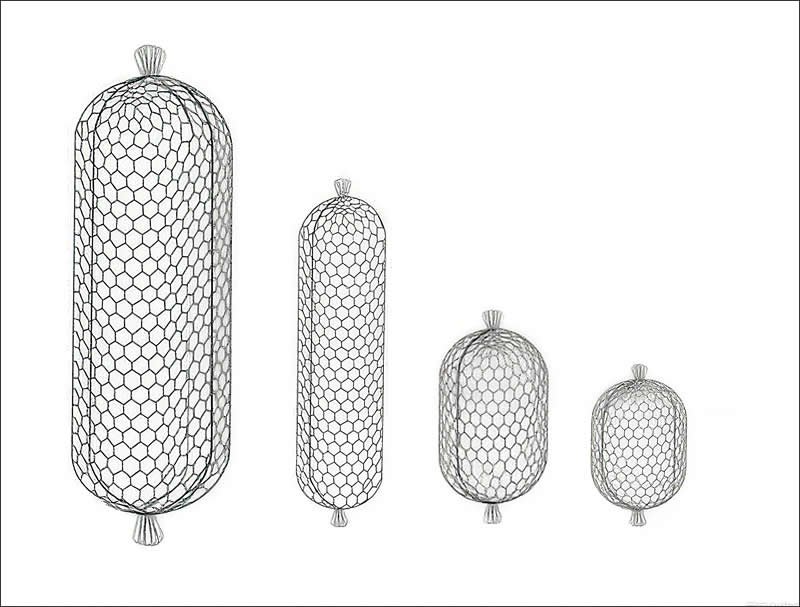
Cylindrical Sack Gabion Diameter 1.0 m Length 3.0 m Specifications
- Mesh opening: 80×100 mm hexagonal mesh
- Wire diameter: 2.4–2.7 mm steel wire
- Edge wire diameter: 3.0–3.4 mm
- Lacing wire diameter: 2.0–2.2 mm
- Gabion diameter: 1.0 m
- Gabion length: 3.0 m
- Stone fill size: 100–200 mm
- Unit volume: about 2.35 m³
- Unit weight before fill: 35–45 kg
- Connection method: lacing wire or spiral wire
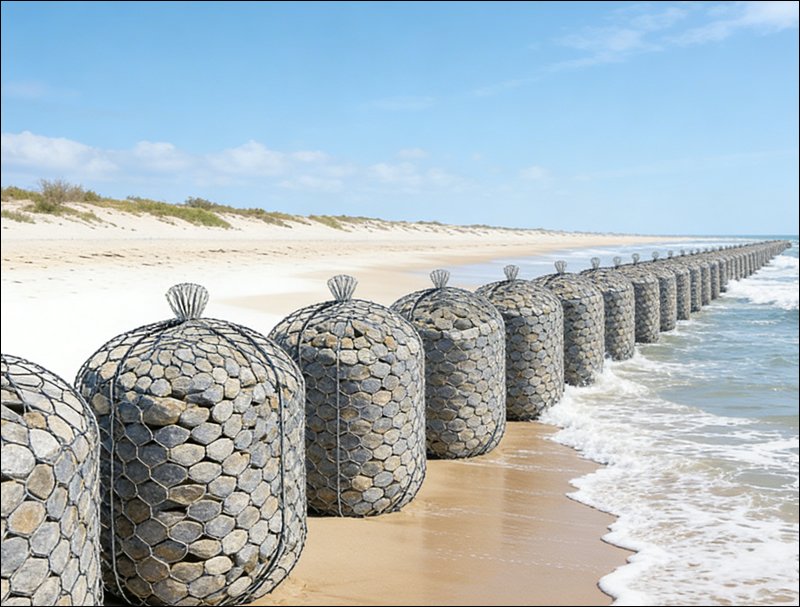
Cylindrical Sack Gabion Diameter 0.6 m Length 2.5 m Coastal Barrier
- Gabion diameter: 0.6 m
- Gabion length: 2.5 m
- Stone fill size: 80–150 mm
- Unit volume: about 0.70 m³
- Weight before filling: 20–30 kg
- Connection method: lacing wire
- Barrier spacing: 0.5–0.8 m
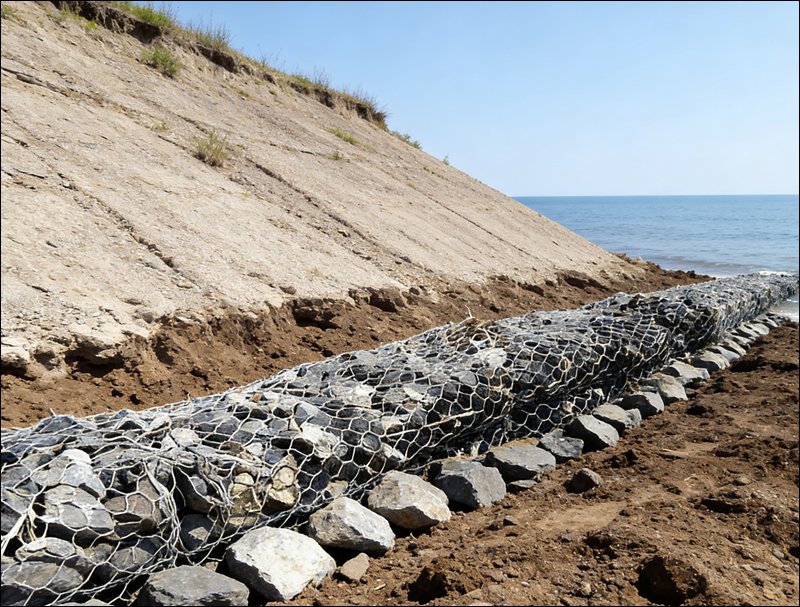
Cylindrical Sack Gabion Diameter 0.8 m Length 3.0 m Riverbank Protection
- Mesh opening: 80×100 mm
- Wire diameter: 2.4–2.7 mm
- Edge wire diameter: 3.0–3.4 mm
- Gabion diameter: 0.8 m
- Gabion length: 3.0 m
- Stone fill size: 100–200 mm
- Unit volume: about 1.50 m³
- Weight before filling: 30–40 kg
- Connection method: lacing wire
- Placement distance: 0.5–1.0 m between units